
De-Risking Certification Before the BOM Exists
Certification Risk Starts Earlier Than Most Teams Expect
For many robotics and automation teams, first-time certification is manageable.
The harder problem appears during next-generation designs — when teams want to move fast, reuse what already works, and avoid reopening months of safety analysis, while still evolving early architecture.
A common scenario looks like this:
- A first-generation system has already achieved CE Marking and/or UL certification
- A new generation is under development
- Some subsystems are defined, others are still fluid
- Vendors and BOMs are not yet finalized
The challenge isn’t whether the next system can be certified — it’s how to reduce certification ambiguity early, before design and supplier decisions become expensive to change.
The Problem: Certification Ambiguity Without a Finalized BOM
Early in a redesign cycle, teams often have:
- CAD models of subsystems or assemblies
- Electrical schematics (often as PDFs)
- A technical file from a previously certified product
But they typically don’t have:
- A complete bill of materials
- Locked component vendors
- Clear answers on which prior compliance evidence still applies
This creates familiar uncertainty:
- Which standards still apply unchanged?
- Which components require re-evaluation?
- Where should engineering effort be focused before procurement decisions are locked in?
The Workflow: Early-Stage Component Gap Analysis
Saphira is designed to work before traditional certification workflows begin — using partial, real engineering inputs to surface risk early.
Here’s the generalized workflow.
1. Start With Unstructured Design Inputs
Instead of waiting for a finished BOM, teams can provide:
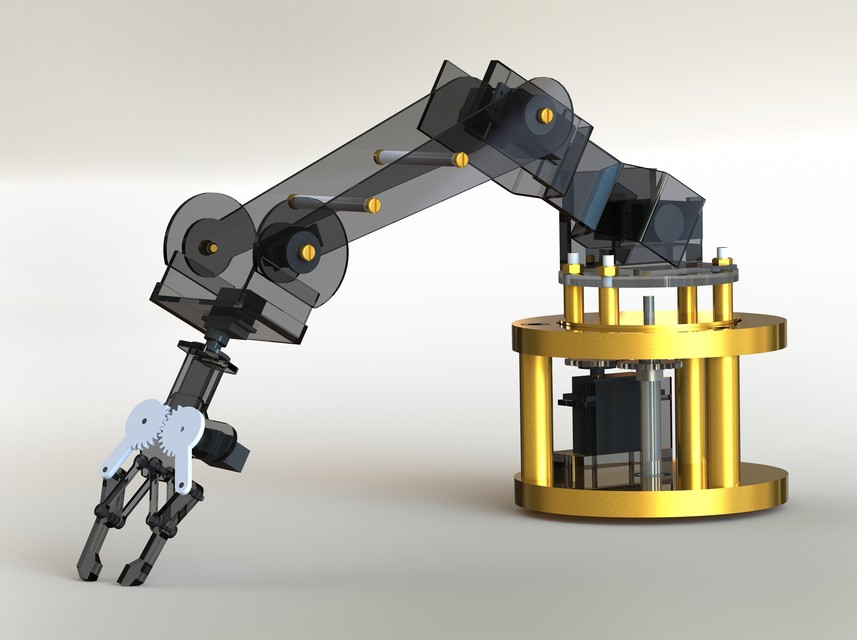
- A CAD model of a subsystem
- A PDF electrical schematic
- Optionally, a prior product’s technical file
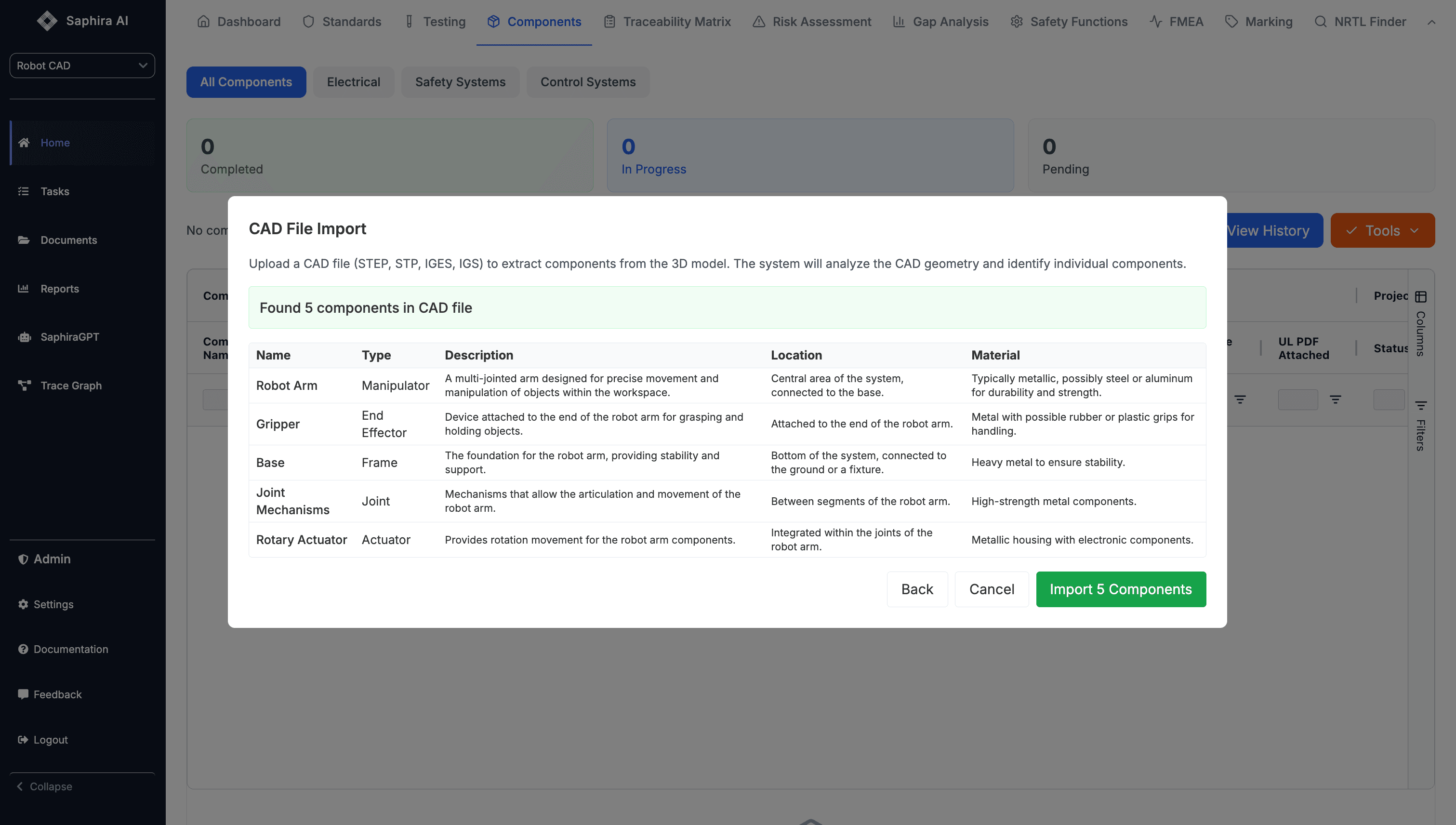
Screenshot: Uploading a CAD model or electrical schematic into Saphira
2. Automated Subsystem Teardown
Saphira analyzes unstructured inputs to identify composite components, such as:
- Wiring and cable assemblies
- Fuse blocks and protective devices
- Enclosures and ingress points
- Sensors, actuators, and control electronics
This produces a structured component graph even when no BOM exists yet.
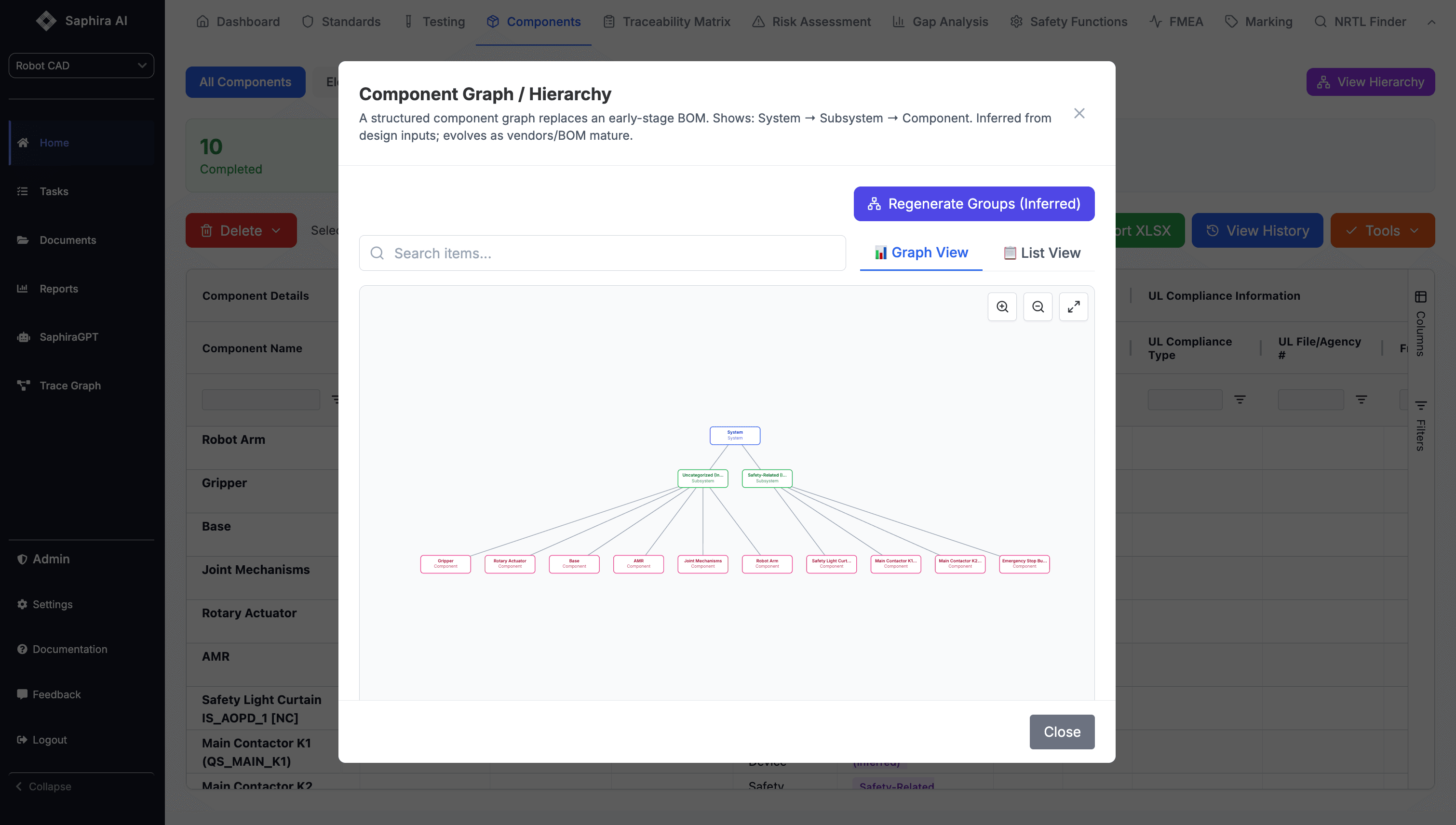
Screenshot: Subsystem-to-component breakdown view
3. Standards Inheritance From Prior Designs
Using context from previously certified systems, Saphira can infer:
- Which top-level standards were applied
- How those standards cascade down to subsystems and components
This allows teams to reuse accepted certification logic while still accounting for design changes.
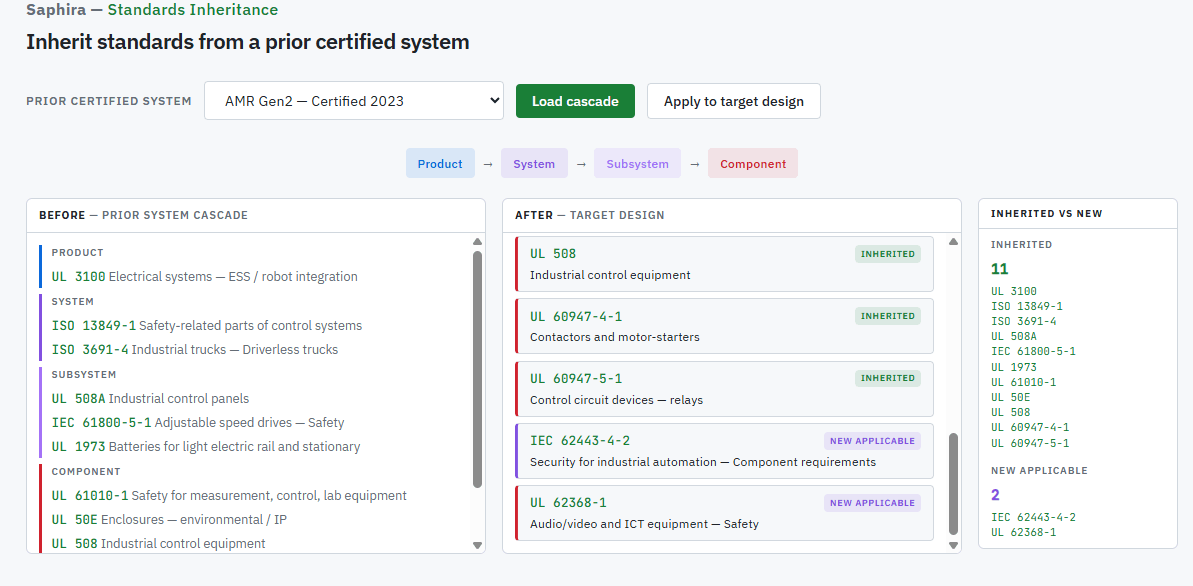
Screenshot: Standards mapping from system → subsystem → component
4. Component-Level Gap Analysis
For each identified component, Saphira evaluates:
- Applicable clauses and test requirements
- Whether existing compliance evidence still applies
- Where changes introduce new or unclear obligations
The result is a focused gap analysis, not a generic checklist:
- What is already covered
- What needs review
- What is likely unaffected
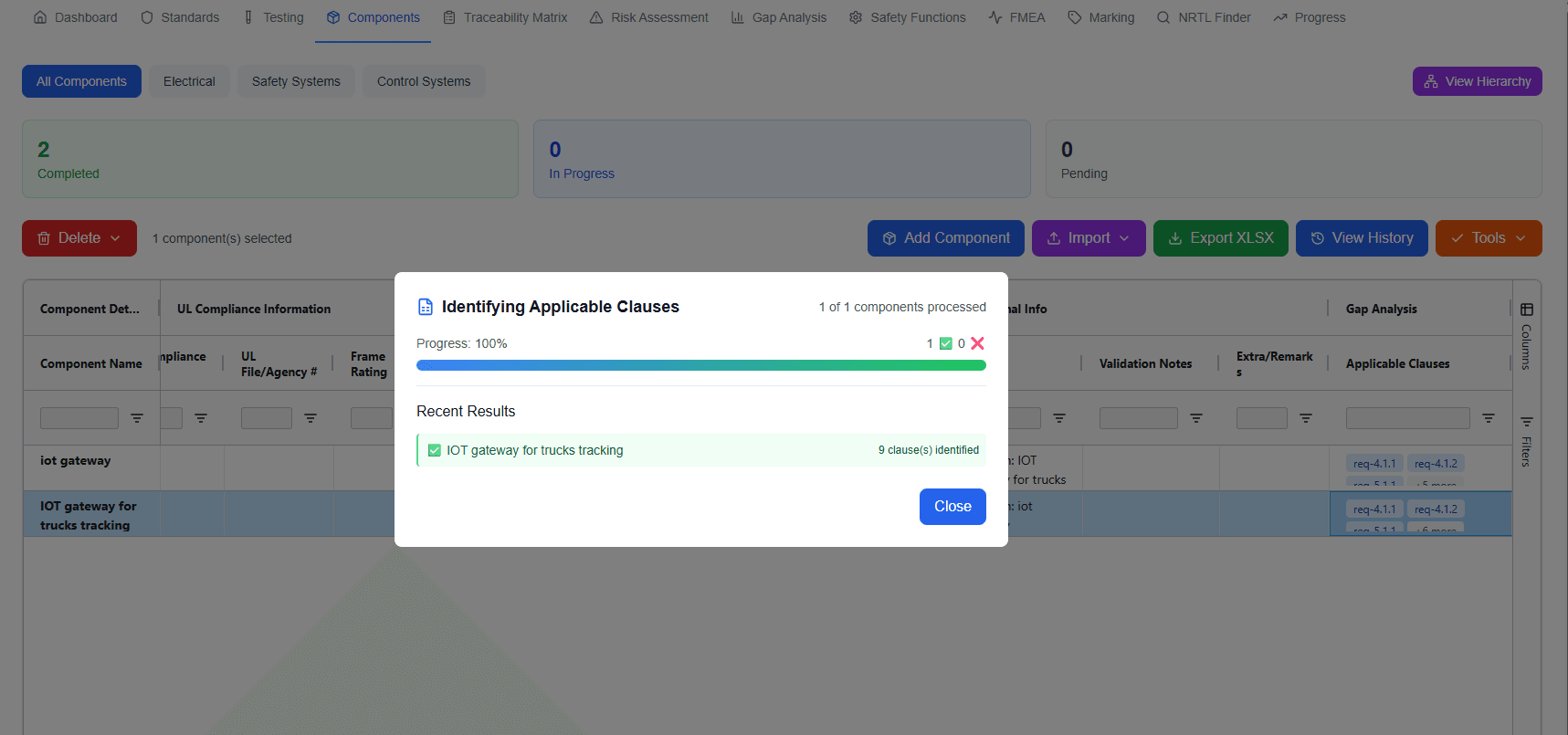
Screenshot: Component Level Gap Analysis
5. Supplier Discovery for Pre-Certified Components
Where gaps exist, Saphira can search:
- Its internal compliance database
- Global supplier catalogs
To identify commercially available, appropriately certified components, explicitly excluding custom-manufactured parts.
This enables informed supplier decisions before designs are locked in.
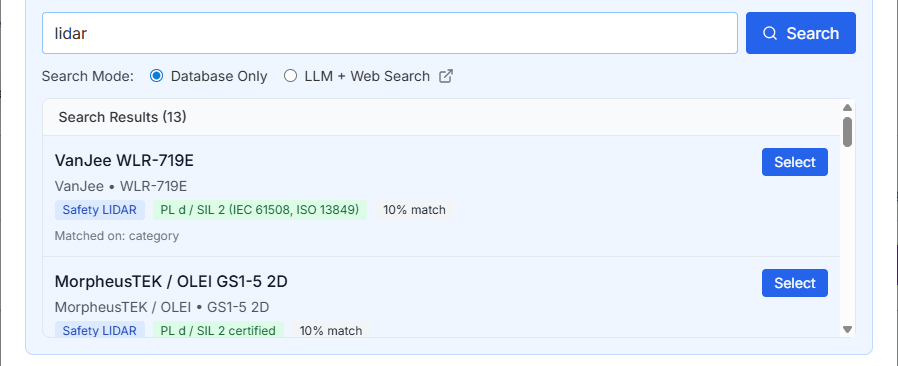
Screenshot: Supplier search results tied to a specific requirement
Why This Matters for Iterative Product Development
This approach allows teams to:
- Surface certification risk months earlier
- Avoid late-stage redesigns driven by test failures
- Make supplier decisions with standards context already attached
- Reuse prior certification effort without blindly copying designs
For teams building iterative robotics or automation platforms, certification becomes a design-time decision tool, not a late-stage blocker.
From Ambiguity to Early Clarity
Early-stage design data doesn’t need to be perfect to be useful.
By combining partial design inputs with structured standards intelligence, teams can:
- Reduce uncertainty
- Focus engineering effort where it matters
- Enter formal certification with far fewer surprises
That’s the goal of early-stage Component Gap Analysis — and why more teams are starting certification work well before the BOM exists.